
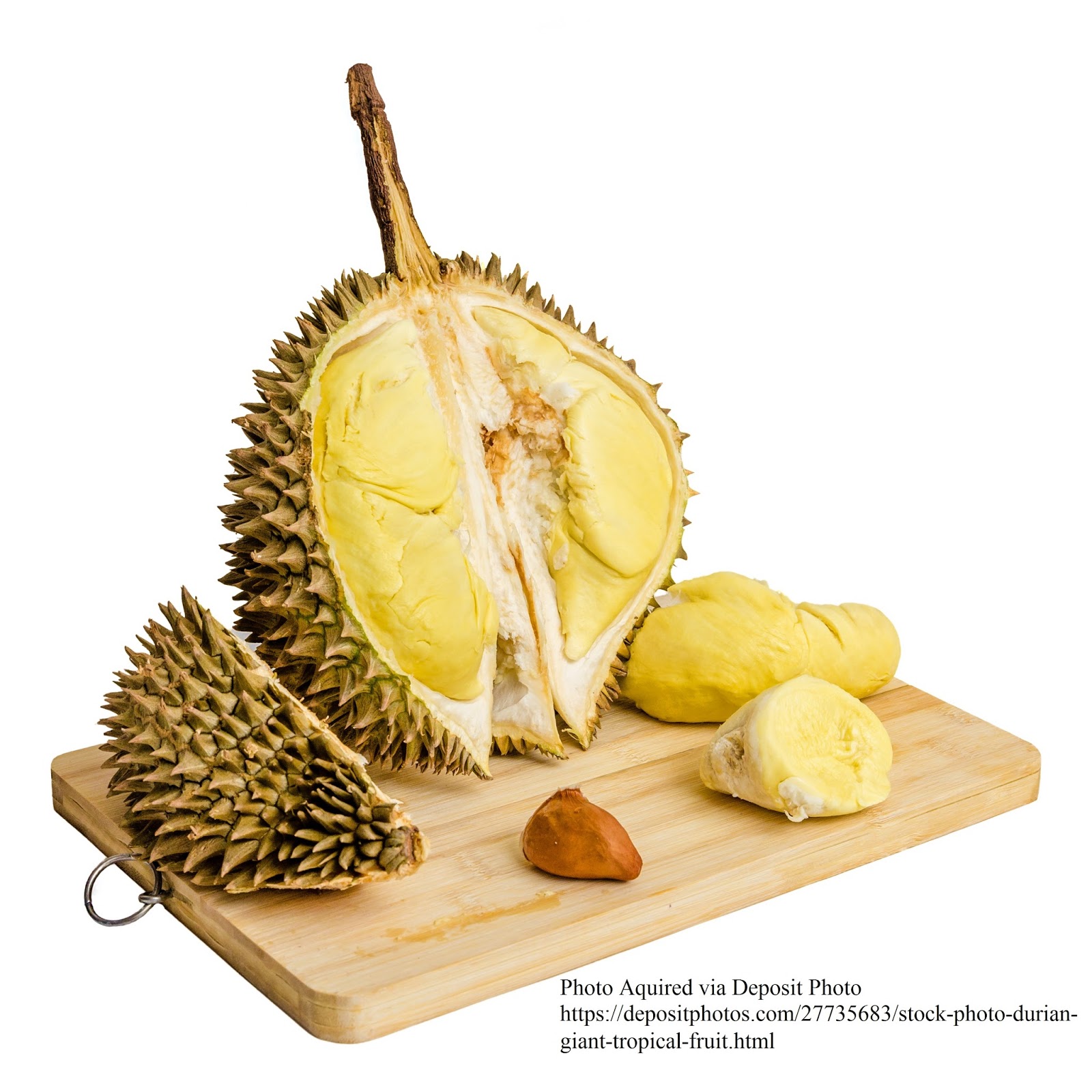
Frequently referred to as the King of Fruits, the durian
fruit is a tropical fruit
grown in Southeast Asia that’s rapidly gaining worldwide popularity and
becoming an important staple of the region’s economy.
What
is Durian Fruit
Durian is a word that’s used to categorize several
fruit bearing trees that produce a large, hard fruit that’s covered in spiked
flesh. Although there are hundreds of different types of durian trees that grow
in Asia, only about nine of the species produce a fruit that’s suitable for
human consumption. People who regularly consume durian fruit love its unique
taste which is often described as tasting like almond flavored custard.
Why
You Should Make Durian Fruit a Regular Part of Your Diet
Nutritionists consider the durian fruit to be a high
energy fruit that’s low in sugar with massive nutritional value. The fruit is
an excellent source of:
- · Dietary fiber
- · Magnesium
- · Potassium
- · Iron
- · Niacin
- · Protein
- · Phosphorus
- · Calcium
- · Vitamins A, B, C, E
- · Riboflavin
- · Carotene
- · Ash
- · Tthiamine
- · Ascorbic acid.
The benefits you’ll notice after you make durian fruit
a regular part of your diet include:
- · A stronger immune system
- · Healthier hemoglobin levels
- · Better skeletal health
- · Fewer bouts of depression
- · Decreased blood pressure
- · Lower cholesterol levels
- · Smoother digestion
- · Decreased risk of cancer
- · Younger looking skin
- · Improved fertility
- · More restive sleep
- · An easier time losing weight
Anyone who suffers from gout should notice a significant
decrease in their symptoms when they eat a durian fruit every single day.
How
to Eat Durian Fruit
The sharp spikes set into the skin of the durian fruit
are intimidating. Happily, it’s possible to get to the sweet tasting fruit inside
without poking your fingers, though you’ll want to wear clean, protective
gloves.
Simply place the durian fruit, stem side down, on a
cutting board and use a large knife to cut the skin. Once the cut is 3-4 inches
long, set the knife aside and use your hands to pull the rest of the skin
apart. Once you’ve done this, you can spoon the fruit out.
Most people choose to eat the fruit raw, but other
options include:
- · Durian fruit ice cream and milkshakes
- · Fried in a little olive oil
- · Baked
- · Turned into a jam
In addition to eating the fruit’s meat, you can also
boil the seed and consume that as well. It’s also quite nutritious and tastes
like jackdaw fruit.
Unique
Characteristics of Durian Fruit
The durian fruit possesses two unique features. The
first thing you notice about the tropical fruit is its spikey appearance. The
hard shell is covered with spikes which are sharp to the touch.
The second characteristic that most people notice, and
the one that bothers Westerns the most, is the fruit’s unique smell, which has
been compared to everything from rotten onions, to sewage, to limburger cheese.
It’s strong enough that many people refuse to get close the fruit, much less
eat it. The scent is strong enough and offensive enough that many buildings and
airlines have banned it.
However, if you’re willing to ignore the smell long
enough to sample a piece of the fruit, you’ll quickly decide that the flavor
trumps the fruit’s scent.
It’s important to understand that the scent of the
durian fruit is an actual characteristic and not a sign that the fruit is
spoiled or rotting. Recently,
a group of scientists representing the German Research Center for Food Chemistry took it upon themselves to learn,
once and for all, why durian fruit has such a peculiar odor.
Determining which
components created the memorable scent required the use of both a chromatograph
and a mass spectrometer. With the help of the machines, the research team
learned that no less than fifty different compounds come together and create
the unique durian fruit perfume.
Even
more surprising than the sheer number of components involved in the process was
that no less than eight of them had never been seen before.
Some of the compounds
found in durian fruit are:
- · Propane-1-thiol
- · Methanethiol
- · Ethyl 2-methylpropanoate
- · Hydrogen sulfide
- · Ethyl cinnamate
- · Dimethylfuran-2(5H)-one
- · Ethanethiol
- · Acetaldehyde
- · And many more
Now that science has
managed to identify the specific compounds responsible for the fruits odor,
they can start exploring whether there’s a reason nature saw fit to bestow the
fruit with such a strange scent. One possible explanation is that the strong
odor helps attract monkeys and other animals that enjoy durian fruit from long
distances, which aides in the disposal of the seeds.
A
Word of Caution
For as long as people in Asia have enjoyed durian
fruit, there have been warnings about not consuming alcohol at the same time,
though no one was completely sure why. In 2009, a study was conducted in Japan
that revealed that when you eat a durian fruit, your liver struggles to use aldehyde
dehydrogenase (ALDH), and enzyme that aides with the body’s breakdown of
alcohol. What does this mean? That there’s a chance that the combination of
durian and alcohol could result in death.
http://www.nutrition-and-you.com/durian-fruit.html

